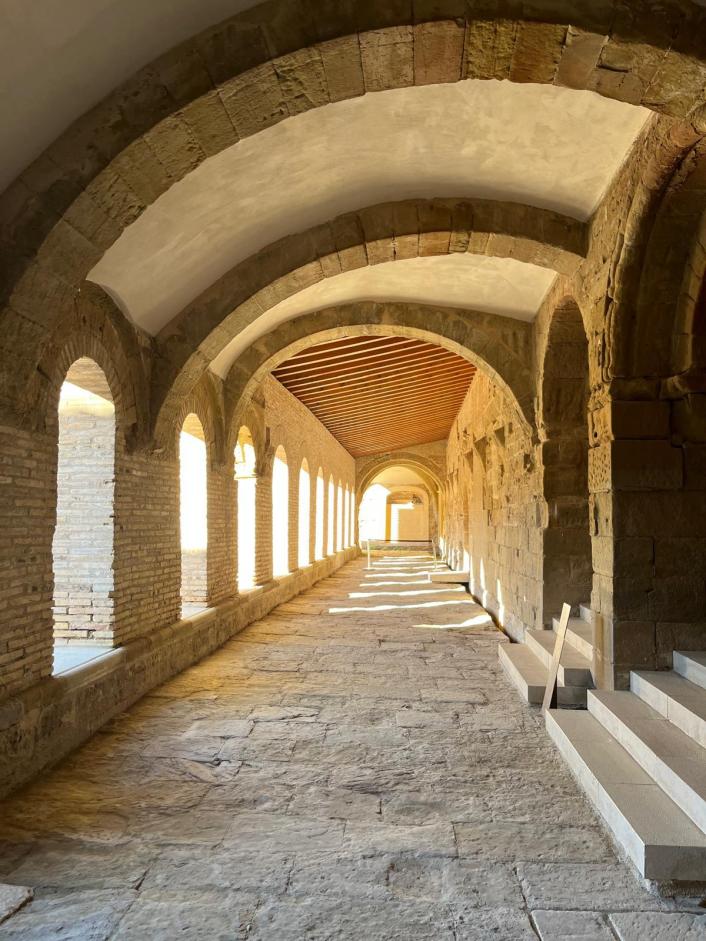
Sijena visit
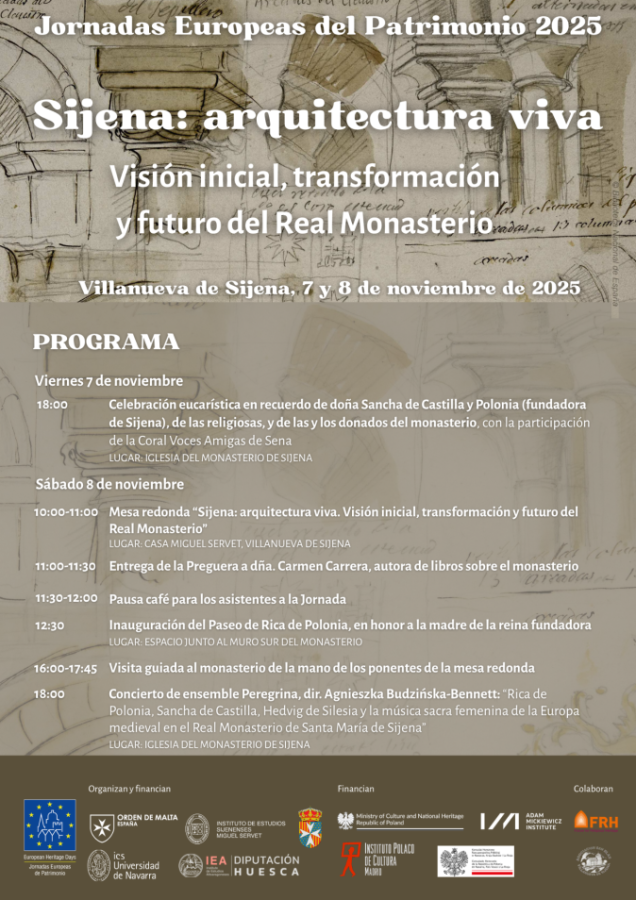
Since the Cantrix CD was released in 2013, the prospect of performing in Sijena and singing the pieces for St John the Baptist, as they have been sung and prayed across the ages by the Sisters, seemed and important but distant vision. The circumstances surrounding Ensemble Peregrina's lecture and concert in Sijena on 8 November 2025, the historical anniversary and vigil of Queen Sancha's death, coincided with the European Heritage Days. These European event were hosted as a conference on Sijena's architecture and the opening of the Paseo Rica de Polonia, a circumstance that proved providential for the Ensemble. It seemed as if all powers in heaven and earth were calling us to Sijena on that day. When the distant vision became reality, in collaboration with the organising team of the European Heritage Days, it was already November 2025. In such a short time, the Ensemble Peregrina was able to coordinate travel to this 'remote' place. All the effort was worthwhile in order to be there and to experience the living sounds within the walls of the monastery church.
Those involved included Anna Dulska from the University of Navarra and the Spiritus Movens of Sijena, the Order of Malta, Sister Virginia from the Sijena Sisters, Juan Naya, who was born in Sijena and is a great propagator of the monastery and its famous collection of wall paintings, and the Ensemble Peregrina, who first recorded and performed the music for St John the Baptist in this format. The event was organized and supported by the Institut Adam Mickiewicz, the Institut Polski w Hiszpanii, the Ministerstwo Kultury i Dziedzictwa Narodowego, the Malteserorden Schweiz and Espana and the Institut Miguel Servet in Villanueva de Sijena.
Paseo Rica de Polonia
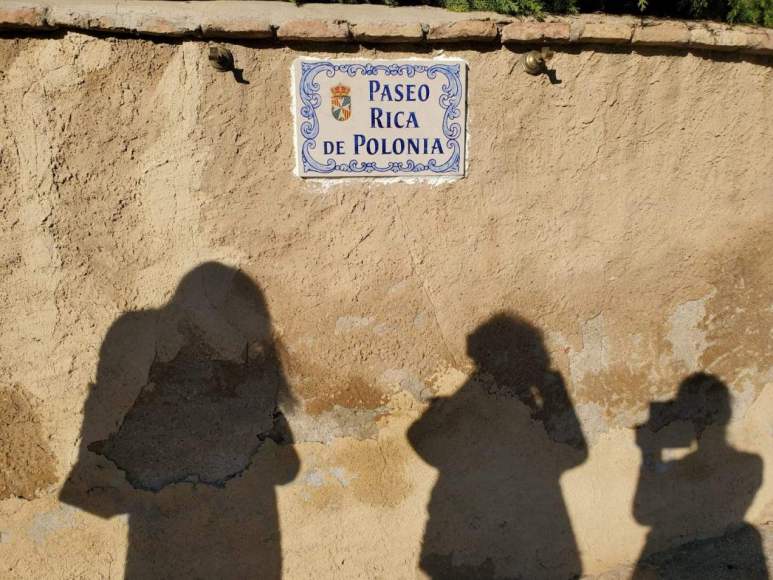
On 8 November 2025, Gaude Mater Polonia reached the walls of the Monastery Church at the end of the concert in Sijena. On this very day, one of the streets near the monastery was named 'Paseo Rica de Polonia'. Rica de Polonia (1130–1140–1185) was the daughter of Władysław II Wygnaniec and the second wife of Alfonso VII of Castile. Their only child was Sancha of Castile and Poland (1154–1208), the future Queen of Aragon and foundress of the Sijena monastery. Following her father's death in 1157, it is highly probable that Sancha was raised by her aunt Urraca, rather than her mother. Nevertheless, the fact that she had a Polish mother makes the Sijena Foundation dear to every Polish heart.
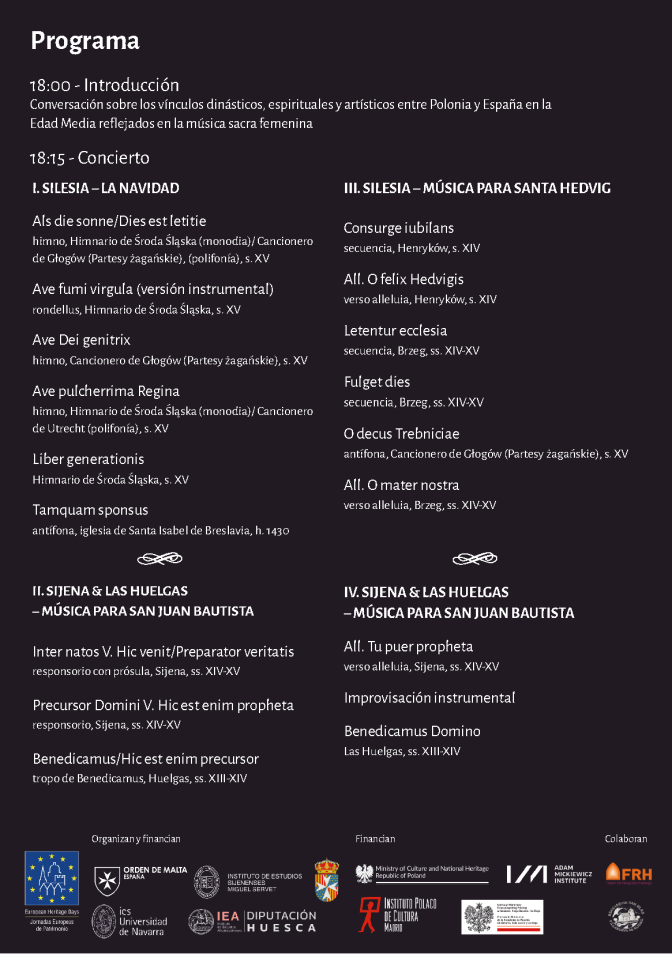
Sijena concert
Rica de Polonia, Sancha de Castilla, Hedvig de Silesia, Música sacra femenina de la Europa medieval en el Real Monasterio de Santa María de Sijena
Rycheza Polska (Śląska), Sancha Kastylijska i Jadwiga Śląska oraz żeńska muzyka sakralna z Aragonii, Kastylii i Śląska w królewskim klasztorze Najświętszej Marii Panny w Sijenie (Aragonia, Hiszpania)
Inter natos V. Hic venit/Preparator veritatis - responsorio con prósula, Sijena, ss. XIV-XV
Precursor Domini V. Hic est enim propheta - responsorio, Sijena, ss. XIV-XV
Benedicamus/Hic est enim precursor tropo de Benedicamus - Huelgas, ss. XIII-XIV
Als die Sonne / Dies est letitie – cantio (kancjonał ze Środy Śląskiej / partesy żagańskie, XV w.)
Tamquam sponsus – antyfona (kościół św. Elżbiety we Wrocławiu, ca. 1430)
Consurge iubilans – sekwencja ku czci św. Jadwigi Śląskiej (Henryków, XIV w.)
Gallery pictures by José Sobella c2025